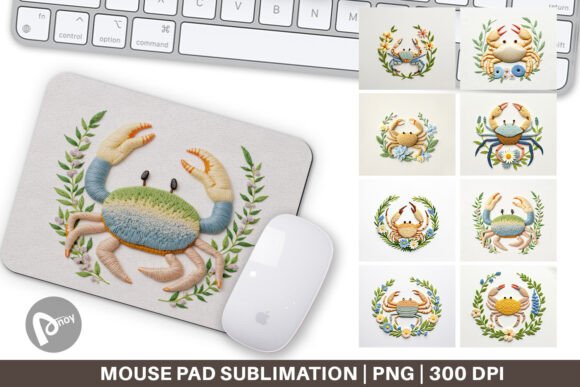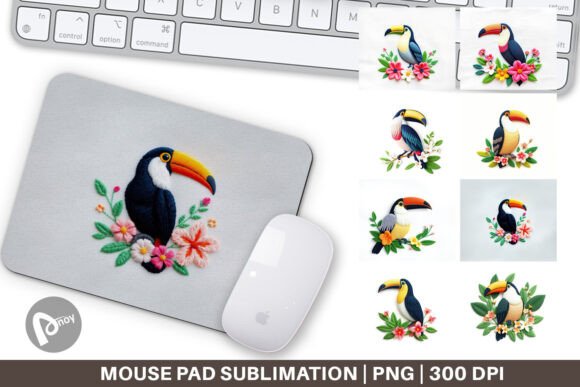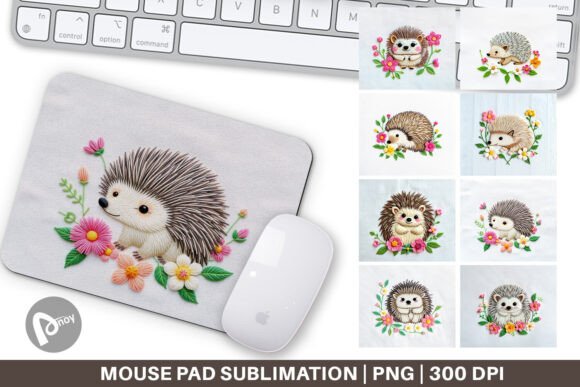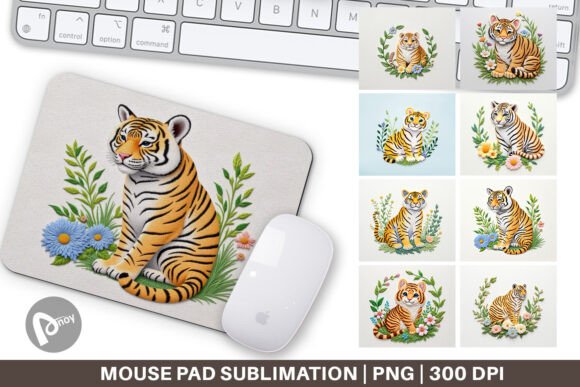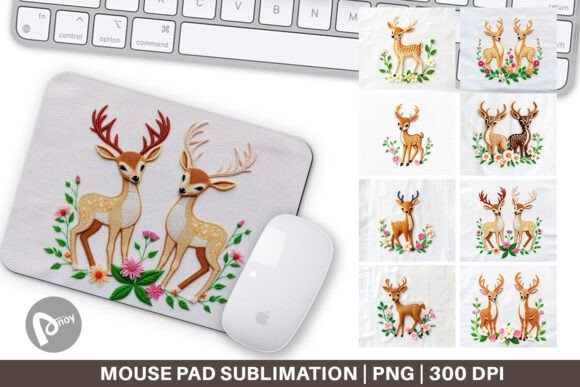
Mouse Pad Deer Embroidery
A Practical Review for Small Business Merch & Branded Patches
As an embroidery designer who’s digitized over 2,000 logos and illustrations for cafés, boutiques, florists, pet brands, and handmade studios, I approach every new design with one question: Does this work as a functional brand asset—not just a pretty picture? When I first saw Mouse Pad Deer Embroidery, my instinct was to pause. The title suggests sublimation use on a mouse pad—but the description confirms you receive 8 PNG files, each sized at 9.5 x [unit unspecified]. That tells me this is a digital illustration intended for adaptation—not a ready-to-stitch machine embroidery design. Let’s break down what that means for your small business.
First Impression: Friendly, Rustic, and Handmade-Adjacent
The name Mouse Pad Deer Embroidery evokes warmth, nature, and approachability—ideal for local businesses that lean into storytelling: think a mountain-town bakery, a botanical apothecary, or a sustainable pet gear brand. It doesn’t read as corporate or sleek; instead, it lands as friendly, rustic, and gently playful. That’s a strength—not a limitation—if your brand voice values authenticity over polish. As an Illustration in the Graphics category, it’s built for versatility: scalable, clean-lined, and likely optimized for sublimation printing. But remember: a PNG is a starting point—not a finished embroidery file.
Real-World Use Across Small Business Touchpoints
Here’s where experience matters. I’ve tested designs like Mouse Pad Deer Embroidery across dozens of commercial applications—and here’s how it performs:
- Embroidered patches: Excellent candidate for woven or chenille patches (3”–4” size), especially for aprons, tote bags, or staff jackets. Its silhouette-based structure holds up well when digitized with moderate stitch density.
- Apron embroidery & cap fronts: Works cleanly at 2.5” width if simplified—avoid fine antler details or tight inner curves unless using high-resolution digitizing and quality stabilizer.
- Tote bag design & product packaging accents: Strong visual anchor. Pair it with a short brand name (e.g., “Hearth & Hollow”) for boutique merchandise or customer thank-you gifts.
- Staff uniforms & event merch: Adds warmth without overwhelming—perfect for seasonal pop-ups, farmers’ market booths, or local festivals where handmade presentation builds trust.
- Etsy branding & craft business assets: Use the PNGs to build printable mockups, social media banners, or packaging labels—then commission a digitizer to turn it into a true machine embroidery design.
Where to Proceed With Care
Not every surface welcomes deer antlers equally. Here’s where Mouse Pad Deer Embroidery needs thoughtful adaptation:
- Small patch sizes (under 2”): Antler tips and eye detail may blur or vanish. Always test a black-and-white version first to assess readability.
- Curved surfaces (cap fronts, sleeve cuffs): Requires proper underlay and reduced density to prevent puckering—especially on structured twill or textured canvas.
- Dark uniforms & high-wash items: Confirm thread color contrast (e.g., ecru on navy, charcoal on oatmeal). Avoid light pastels on dark fabric unless using topstitching or backing for opacity.
- Fabric texture: Heavy linen, burlap, or slub cotton will mute fine outlines. Digitize with slightly heavier satin stitches and open fill areas.
Impact on Brand Identity & Customer Perception
Your logo isn’t just decoration—it’s a silent ambassador. Mouse Pad Deer Embroidery supports brand identity by reinforcing values: natural materials, local charm, craftsmanship, and quiet confidence. When stitched onto a barista’s apron or a florist’s tote, it signals intention—not trend-chasing. Customers notice consistency: seeing the same gentle deer motif across your Instagram story, embroidered packaging, and staff gear builds recognition and trust. For Etsy sellers and handmade brands, that cohesion elevates perceived value—shifting perception from “cute item” to “thoughtfully built brand.” Just ensure it aligns with your other design assets: compare it beside your typography, color palette, and existing icons before committing to large-batch production.
Practical Embroidery Designer Notes
Before turning Mouse Pad Deer Embroidery into real-world custom apparel or embroidered patch production, follow these steps:
- Test in black and white: Print it at actual size to verify clarity and balance—no color distraction.
- Check scalability: Zoom in at 200%—do lines stay crisp? Are antlers distinct from the head shape?
- Review thread color contrast: Simulate on your target fabric swatch. Light threads on dark fabric need denser stitching.
- Inspect spacing & isolation: Ensure no elements float too close to edges—critical for hoop clearance and trimming.
- Confirm hoop size compatibility: If digitizing for 4” hoops, keep the widest element under 3.5” to avoid re-hooping mid-stitch.
- Test on real fabric: Run a sample on your most common base (e.g., denim, poly-cotton twill) with recommended stabilizer.
- Create a client-approved mockup: Use the PNGs to build a realistic printable mockup—showing placement, scale, and context—before digitizing.
- Compare alongside other assets: Does it harmonize with your wordmark, icon system, and packaging? If not, simplify or adjust proportions.
- Verify commercial licensing: Since this is sold as a digital embroidery file derivative (PNG), confirm usage rights cover commercial embroidery, resale, and branded merchandise—especially for Etsy or wholesale.
In short: Mouse Pad Deer Embroidery is a smart, adaptable foundation—not a plug-and-play embroidery file. With intentional digitizing, smart fabric pairing, and consistent application, it becomes more than decoration. It becomes part of your brand’s quiet confidence.