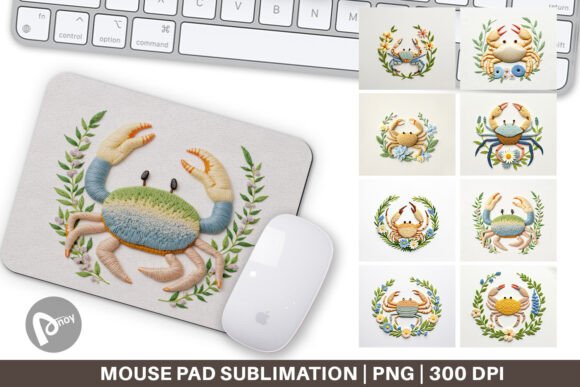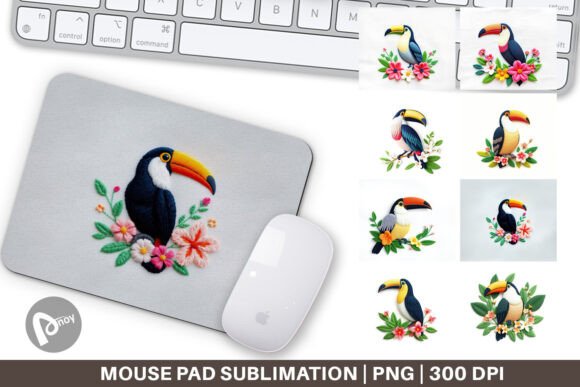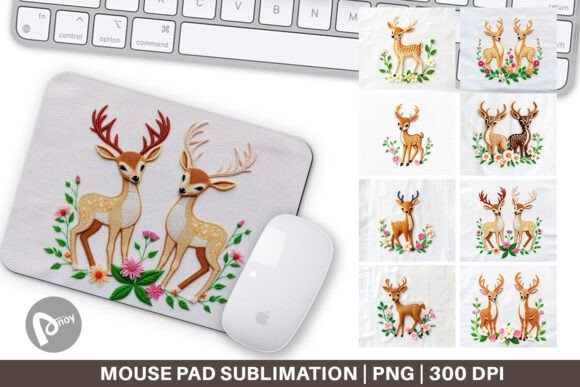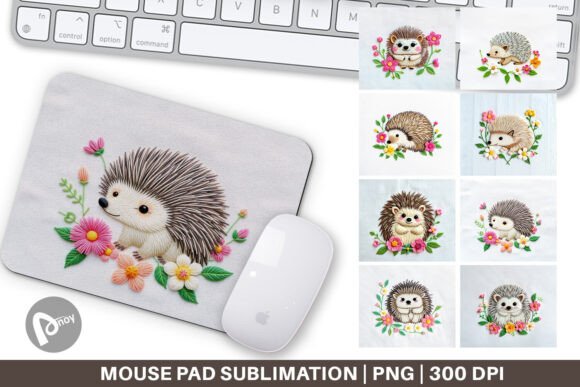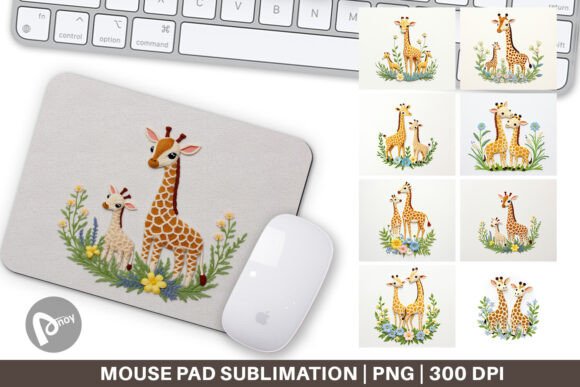
Mouse Pad Giraffe Embroidery
A Practical Review for Small Business Merch & Branded Patches
As an embroidery designer who’s digitized over 2,000 logos and illustrations for cafés, boutiques, pet brands, florists, and handmade studios, I approached Mouse Pad Giraffe Embroidery with a very specific question: Can this illustration translate cleanly into stitched merchandise—not just as decoration, but as functional brand identity? The title suggests playful energy; the description (“sublimation mouse pad,” “PNG file,” “9.5 x”) tells me this is a digital graphic first—designed for print, not stitch. That’s critical context.
First Impression: Friendly, Bold, and Visually Cohesive
Even without seeing the file, the name Mouse Pad Giraffe Embroidery signals approachability and charm—a smart fit for small businesses that want warmth without sacrificing professionalism. Giraffes naturally convey curiosity, gentleness, and standout presence—ideal for a local bakery’s apron, a children’s studio’s tote bag, or a pet boutique’s staff cap. It reads as modern handmade, not cartoonish or overly complex. That matters: too much detail kills legibility at 2.5” patch size; too little feels generic. Based on the category (Illustrations) and type (Graphics), this is likely a clean, vector-influenced outline or silhouette with intentional negative space—exactly what holds up in thread.
Real-World Business Use: Where It Shines (and Where to Pause)
Mouse Pad Giraffe Embroidery works exceptionally well as a small embroidered patch for tote bags, denim jackets, or product packaging accents. Its scale-friendly proportions suit chest logos on staff uniforms, sleeve details on aprons, and front-panel cap embroidery—especially when paired with minimal text like a café name or floral shop monogram. For Etsy sellers and crafters, it adds instant visual storytelling to handmade product labels or gift tags.
But caution is needed in high-friction applications. On curved surfaces like baseball caps, tight stitching around the giraffe’s neck or legs may pucker without precise underlay and reduced stitch density. On dark uniforms or textured fabrics (like canvas aprons or linen tote bags), contrast becomes essential—test thread colors early. And if the original PNG includes fine outlines or tiny facial features? Those will vanish below 2” height. Always verify how Mouse Pad Giraffe Embroidery renders at 1.75” and 2.25” before digitizing.
Brand Identity Impact: More Than Just Cute
For small businesses, consistency is trust. A well-executed Mouse Pad Giraffe Embroidery patch on staff aprons, tote bags, and product packaging creates visual rhythm across touchpoints. Customers subconsciously register that cohesion—it says “this brand pays attention to detail.” Unlike generic clipart, a thoughtfully adapted giraffe design conveys personality: friendly but not childish, distinctive but not distracting. That elevates perceived product value, especially for handmade goods where authenticity drives buyer engagement.
It also supports scalability. You can use the same core shape across multiple assets—a simplified version for cap fronts, the full illustration for tote bags, and a line-art variant for printable mockups—keeping your design assets unified while adapting to format constraints.
Embroidery Designer Notes: Before You Stitch
Here’s what I do before turning any digital embroidery file like Mouse Pad Giraffe Embroidery into physical product:
- Start in black and white. Convert the PNG to grayscale to assess tonal balance—does the giraffe hold shape without color crutches?
- Test at actual patch sizes. Resize the image to 1.75”, 2”, and 2.5” and print. Can you still read the key features? If not, simplify before digitizing.
- Review thread color contrast. Especially on dark or heathered fabric—will light tan thread pop against charcoal denim? Test swatches.
- Inspect spacing and density. Tight loops or overlapping shapes increase stitch density—risking stiffness on lightweight cotton or puckering on stretchy knits.
- Confirm hoop compatibility. Does the design fit standard 4”x4” or 5”x7” hoops? Oversized versions may require re-hooping mid-stitch—adding time and cost.
- Test on real fabric + stabilizer. A giraffe’s long neck needs firm backing on soft fabrics. Use cutaway stabilizer for caps, tear-away for tote bags.
- Create a client-approved mockup. Show how Mouse Pad Giraffe Embroidery looks on an apron, cap, and tote side-by-side—visuals build confidence faster than specs.
- Compare alongside other assets. Does it harmonize with your logo, typography, and existing color palette—or clash visually?
- Verify commercial licensing. Since this is sold as a Graphics file, confirm usage rights for resale items, branded merchandise, and business branding before production.
Final Thought: Design With Purpose, Not Just Pattern
Mouse Pad Giraffe Embroidery isn’t just another cute graphic—it’s a versatile machine embroidery design foundation for small business merch. When adapted intentionally—with attention to scale, fabric, thread, and brand voice—it becomes more than decoration. It becomes recognition. It becomes consistency. It becomes part of your story.
For embroidery shops digitizing for local clients, for Etsy sellers building cohesive collections, and for creative studios launching branded apparel: treat Mouse Pad Giraffe Embroidery as a starting point—not an endpoint. Simplify where needed, reinforce where required, and always test before you commit thread and time. Because in custom apparel and embroidered patches, the difference between “cute” and “compelling” is measured in stitches—and strategy.